
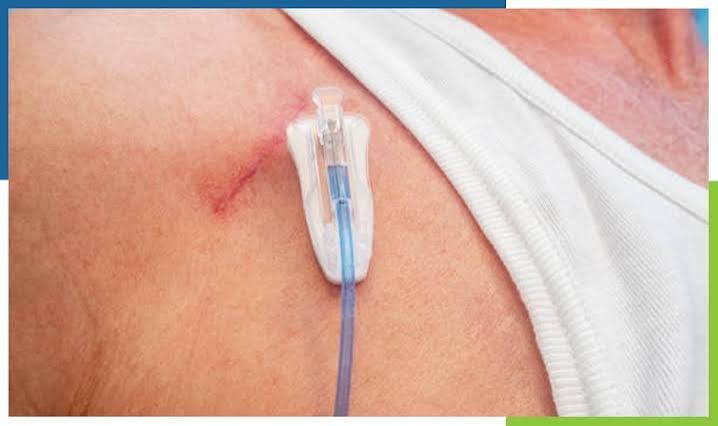

Accessing port is a medical procedure used to reach an implanted venous port. The port sits beneath the skin and connects to a catheter placed inside a vein. Healthcare professionals can use this system to give medicines, fluids, blood products, or draw blood without repeatedly starting a standard IV.
For many patients, port access becomes part of regular treatment. It is especially common when treatment requires repeated or long-term intravenous access. Understanding the process can make appointments feel less uncertain.
What Does Accessing Port Mean?
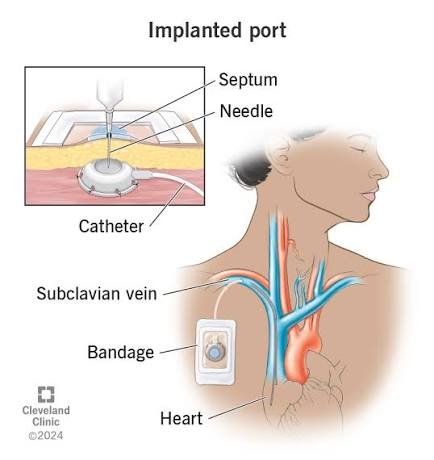
An implanted port is a small medical device placed under the skin. It usually contains three main parts: the port reservoir, the septum, and the catheter.
The port reservoir holds the access point. The septum forms its self-sealing center. The catheter connects the port with a vein.
When a healthcare professional accesses the port, they place a special needle through the skin and into the septum. The needle creates a temporary pathway into the port.
Medication or fluid can then travel through the catheter and enter the bloodstream.
The term may also appear as “port access,” “accessing an implanted port,” “Port-A-Cath access,” or “Mediport access.” These terms generally describe the same basic clinical concept.
Only professionals trained in port care should perform the procedure.
Why Do Patients Need an Implanted Port?
Repeated IV treatment can require frequent needle sticks. An implanted port provides another route for vascular access.
Doctors may recommend ports for patients receiving repeated intravenous therapy. They can also help when peripheral veins are difficult to access.
According to Cleveland Clinic, implanted ports can be used for IV medications, fluids, blood transfusions, and blood draws. They are used in several medical conditions, including cancer and some long-term illnesses.
Ports can also protect peripheral veins from repeated access.
For cancer patients, this can be particularly useful during treatment plans involving frequent infusions. Some medications also need to enter a larger vein.
The device can remain beneath the skin for an extended period. A healthcare provider removes it when it is no longer needed or when complications require removal.
What Happens During Port Access?
Port access follows a controlled clinical process. Exact steps can vary by facility and device.
First, the healthcare professional checks the port area. They look for problems such as redness, swelling, drainage, or unusual pain.
The skin is then prepared using the facility’s infection-control procedure. Maintaining aseptic technique is essential because the port connects with the bloodstream. Clinical protocols commonly use a non-coring needle designed for implanted ports.
The healthcare professional locates the port beneath the skin. The special needle is then placed through the skin and into the port’s septum.
Once access is established, the team may check that the port functions correctly. Blood sampling may be performed when clinically required.
The port can then deliver the prescribed treatment.
If the needle remains in place during treatment, it is secured with an appropriate dressing. The dressing helps keep the needle stable and protects the access site.
Patients may feel a brief pinch or pressure when the needle enters. Some people experience little discomfort. Others may find repeated access uncomfortable.
What Can an Accessed Port Be Used For?
An accessed port can support several types of medical care.
IV medications: Medicines can be delivered directly into the bloodstream.
IV fluids: Fluids can be administered when clinically indicated.
Blood products: Certain ports can be used for blood products such as platelets or plasma.
Blood draws: Healthcare professionals may use the port for blood collection.
Imaging contrast: Some ports are designed for high-speed contrast injection during imaging procedures. These are called power-injectable ports.
The exact use depends on the port type and the patient’s treatment plan.
A healthcare provider should confirm whether a particular port is approved for a specific procedure.
Does Accessing a Port Hurt?
Pain levels differ between patients.
The initial needle insertion may cause a short pinch. Some people describe pressure rather than significant pain.
Repeated access can make the surrounding skin sensitive. Patients should tell their healthcare professional if the discomfort is unusual or increasing.
Some treatment centers may use topical numbing medicine for selected patients. The approach depends on clinical circumstances and local practice.
Patients should not apply products to the port site without following their healthcare team’s instructions.
The goal is safe access, not simply minimizing the sensation of the needle.
What Happens After Port Access?
After the port has been accessed, the treatment can begin.
The access needle may remain in place for the required treatment period. A dressing normally covers the area.
Patients should avoid pulling or disturbing the tubing and dressing.
Once treatment ends, the port may be deaccessed. Deaccessing means removing the access needle after the port is no longer needed.
The healthcare team follows its established procedure for flushing, disconnecting, and removing the needle.
Port maintenance also matters between treatment sessions. Flushing schedules vary according to the device, healthcare facility, and patient’s treatment plan. For example, Memorial Sloan Kettering states that an unused port in its patient guidance should be flushed at least every 12 weeks.
Patients should always follow their own provider’s schedule.
Accessing Port vs. Port Placement
These two terms describe very different procedures.
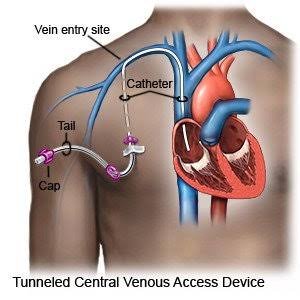
Port placement is the procedure used to surgically position the device beneath the skin and place its catheter into a vein.
Port access happens later. A healthcare professional uses a special needle to reach the implanted port through the skin.
The port can remain inside the body between treatments.
This distinction matters because patients sometimes hear “port procedure” and assume access means another surgery. It usually does not. Access is the routine clinical use of an already implanted device.
Possible Risks and Warning Signs
Implanted ports are designed for repeated medical access, but complications can occur.
Infection is one important concern. Because the catheter connects with the bloodstream, infection can become serious.
Patients should contact their healthcare team if they develop unusual symptoms around the port.
Warning signs can include:
- New pain around the port.
- Increasing swelling near the site.
- Red or irritated skin around the area.
- Drainage or pus from an incision.
- Fever of 100.4°F (38°C) or higher.
- Chills or other concerning symptoms.
Memorial Sloan Kettering specifically advises patients to contact their healthcare provider for these symptoms.
A blocked port can also cause problems. Clinical protocols may require stopping the procedure if resistance or swelling occurs rather than forcing fluid through the device.
Patients should never force a flush or manipulate an accessed port themselves unless their healthcare team has specifically trained them to do so.
Who Should Access an Implanted Port?
Port access requires appropriate training.
Memorial Sloan Kettering states that only healthcare providers trained in port care should access an implanted port.
Clinical protocols emphasize infection prevention, appropriate equipment, correct needle selection, and careful assessment of the port site.
This is especially important because the device provides direct access to the bloodstream.
Patients should therefore avoid attempting routine port access based solely on online instructions.
What Patients Should Remember
An implanted port can simplify repeated IV treatment. It reduces the need for repeated peripheral IV placement and provides a reliable route for certain treatments.
Accessing the port involves placing an appropriate needle into its septum. The procedure requires careful infection-control practices and trained clinical personnel.
Patients also have an important role. They should monitor the site, protect the dressing when the port is accessed, and report unusual symptoms quickly.
Most importantly, every patient should follow the instructions given by their own medical team. Port types, treatment plans, flushing schedules, and clinical protocols can differ.
Key Takeaways
- Port access: Uses a special needle to reach an implanted port.
- Main purpose: Supports medicines, fluids, blood products, and blood draws.
- Safety first: Trained healthcare professionals should perform routine access.
- Watch symptoms: Fever, swelling, redness, drainage, pain, or chills need attention.
- Follow instructions: Your healthcare team determines the correct port-care plan.
Disclaimer: This article is intended for educational and informational purposes only. It is based on publicly available medical guidance and clinical reference materials. It does not replace personalized medical advice, diagnosis, or treatment from a qualified healthcare professional. Implanted port access should be performed only by appropriately trained healthcare personnel unless a patient’s own medical team has provided specific supervised instructions.
Read more:Dallas Yocum Biography: MyPillow, Marriage, Divorce & Private Life